

Foundation
Repair
Let’s get your foundation back on solid ground
Signs your foundation is trying to tell you something
- Bowed, bulging, or leaning walls
- Foundation settlement and sinking
- Cracks in interior walls or floors
- Separated or uneven floors
- Block wall damage
- Water leaks in basement
- Doors and windows that stick or won’t close properly
How Dwyer stabilizes your foundation
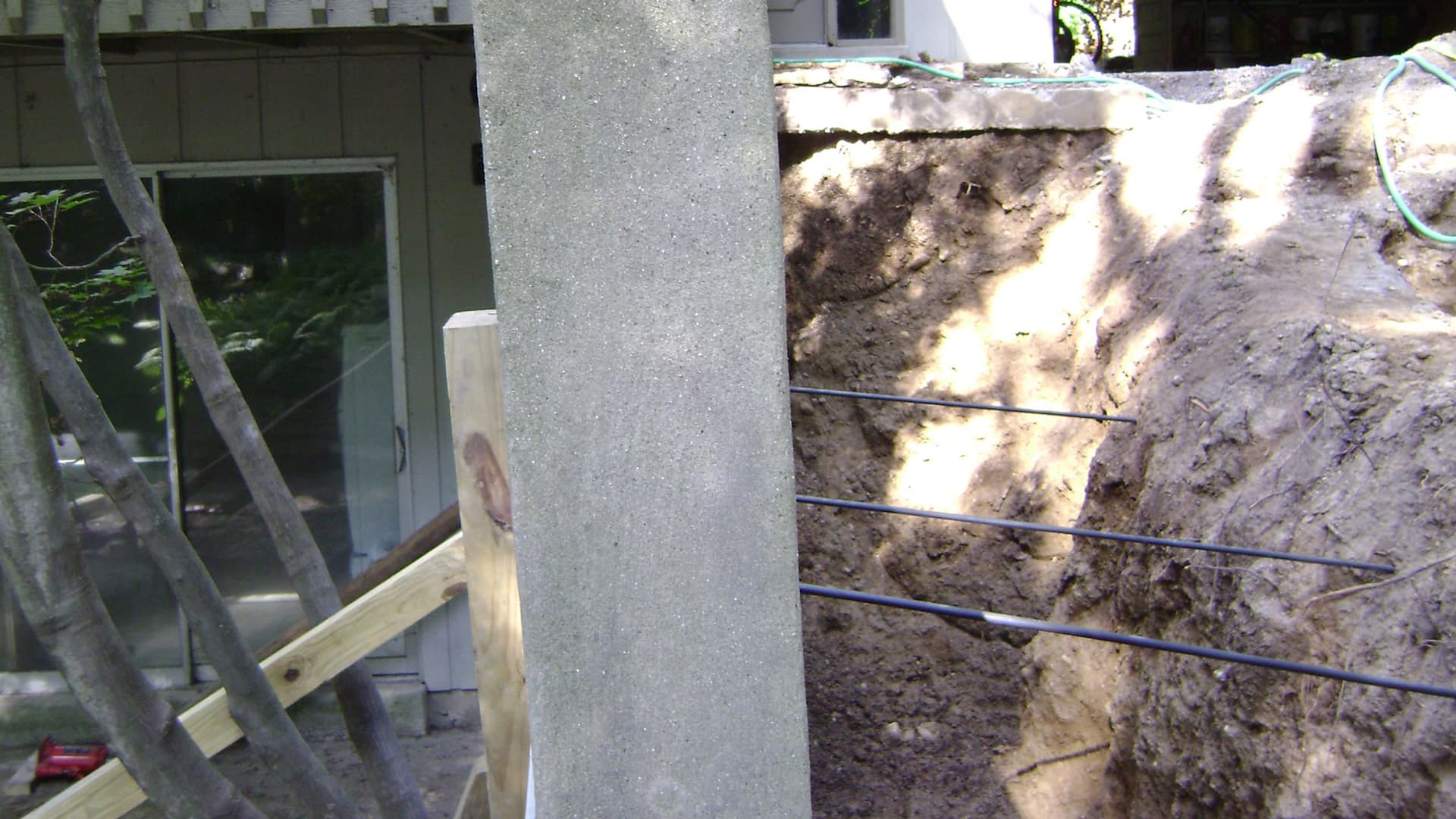
Steel tie-back system, for bowed or leaning walls.
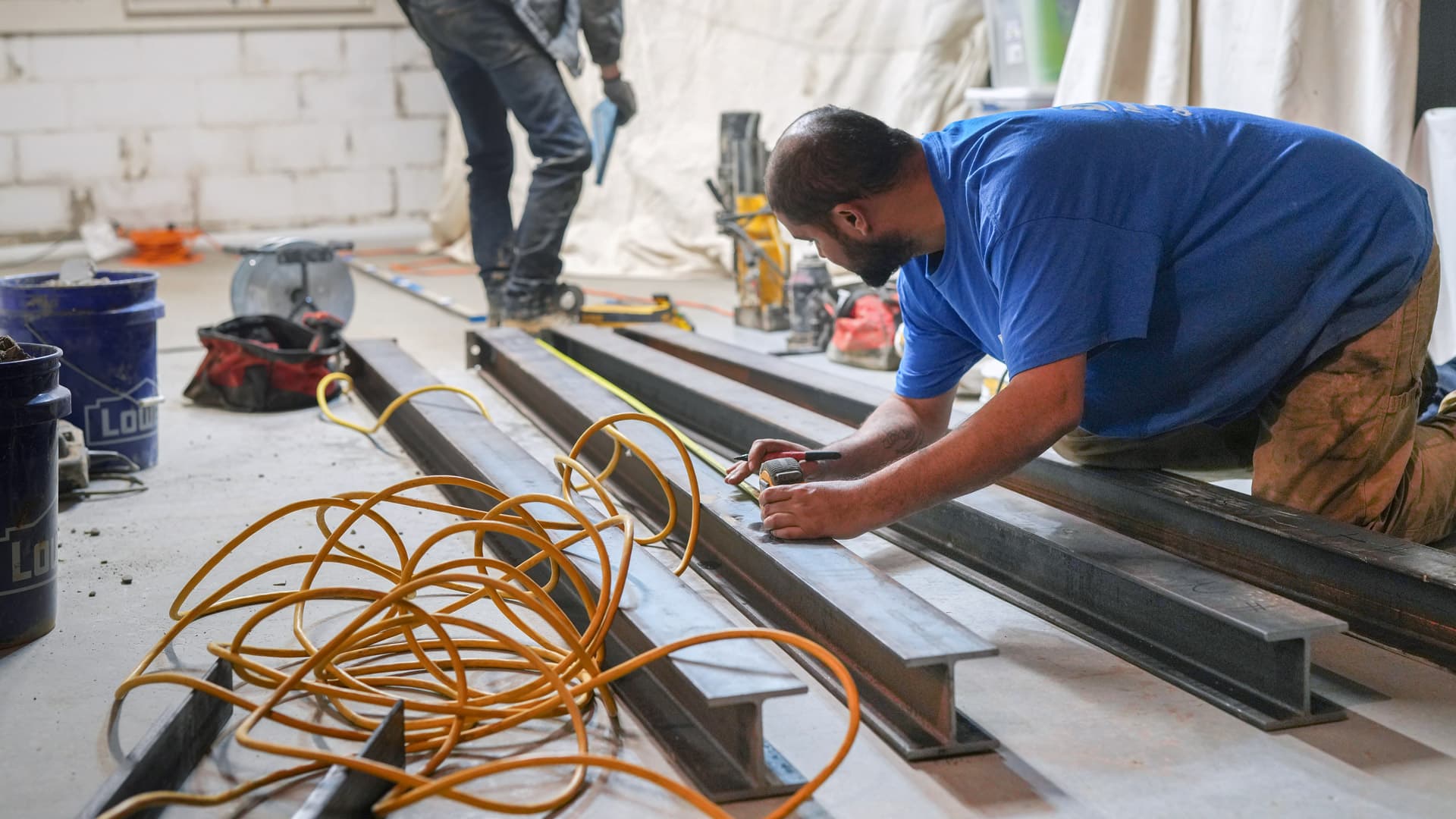
Steel pilaster system, for reinforcing a wall in place.
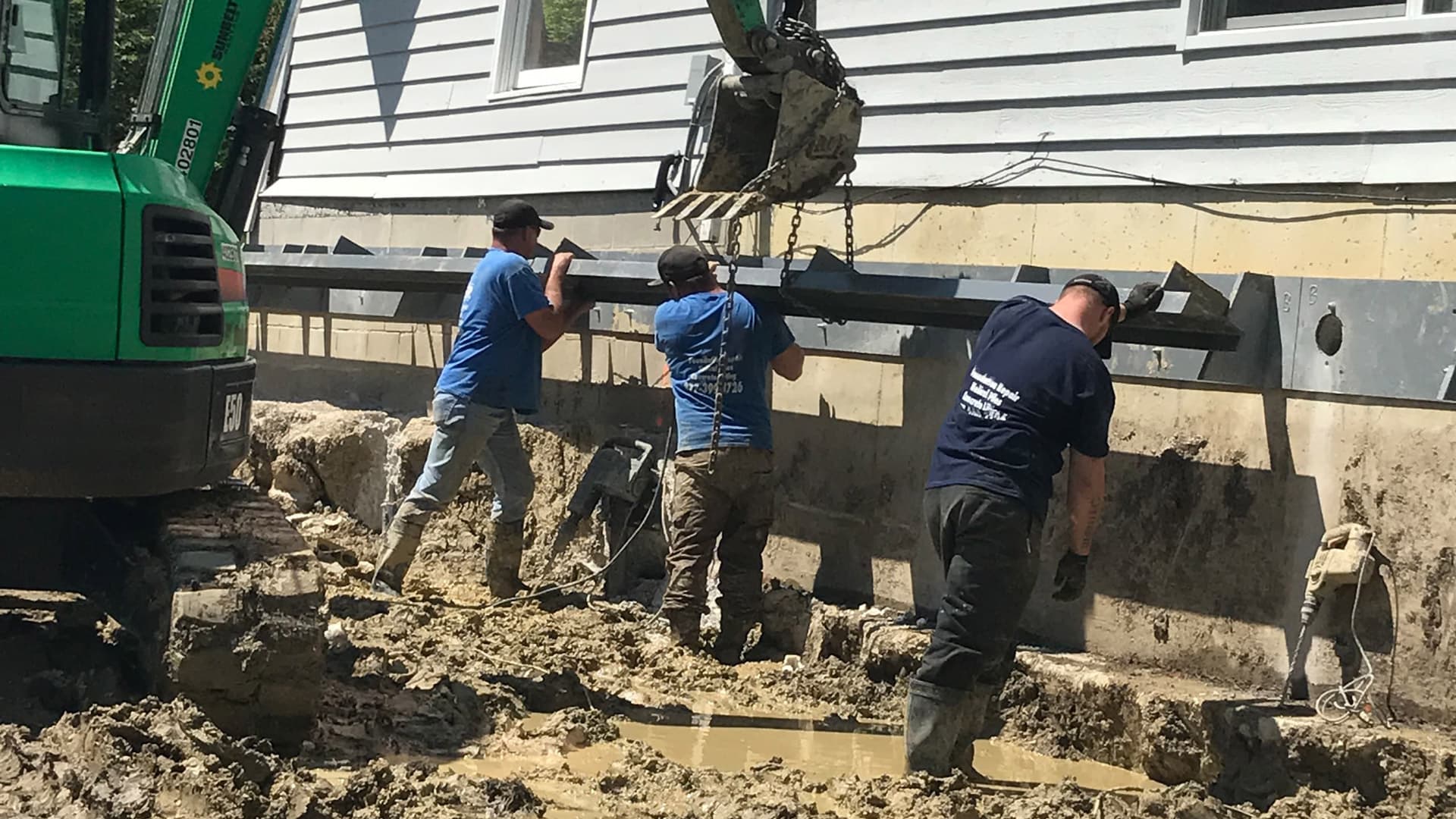
Helical piles, for a settling or sinking foundation.
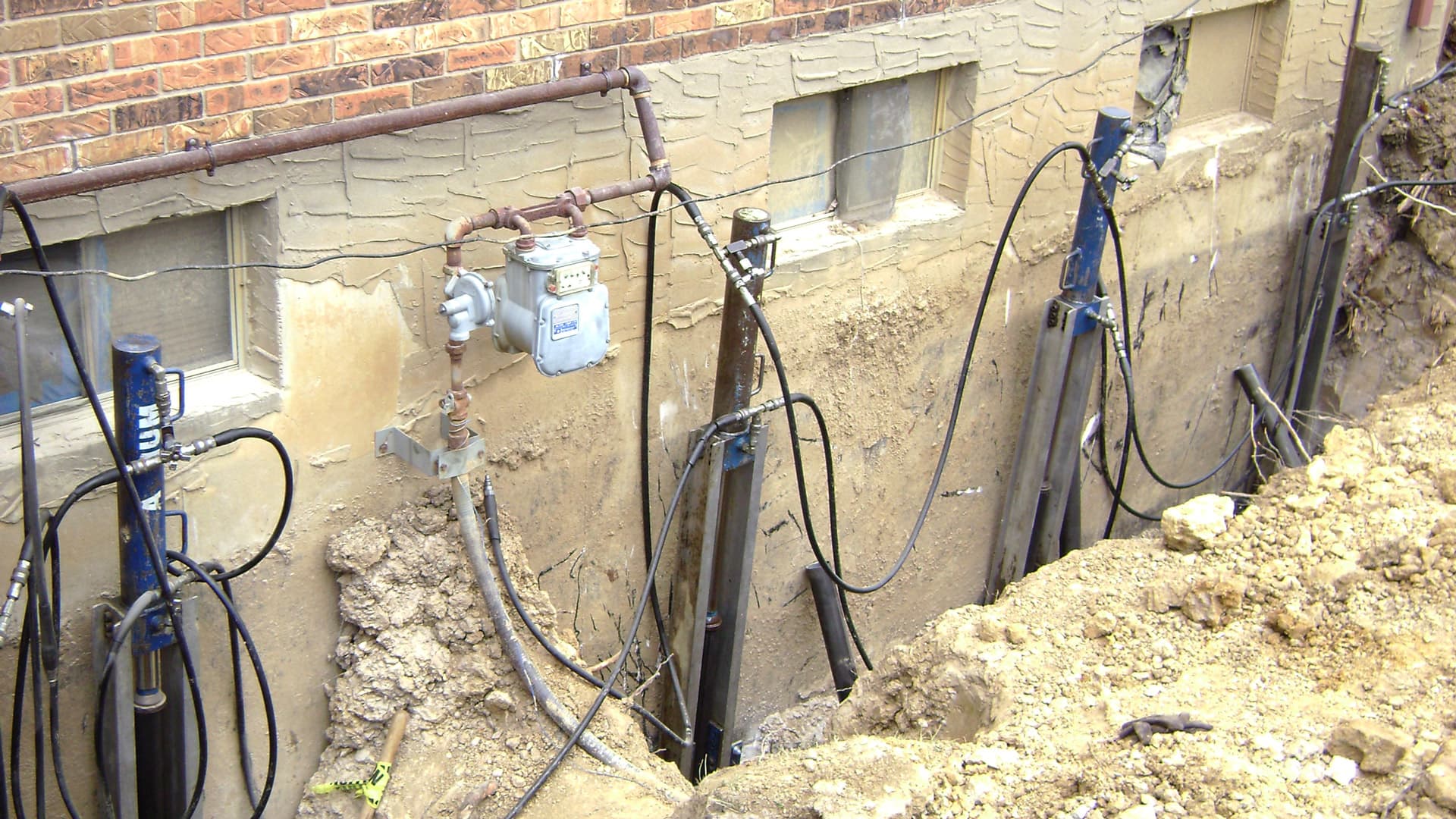
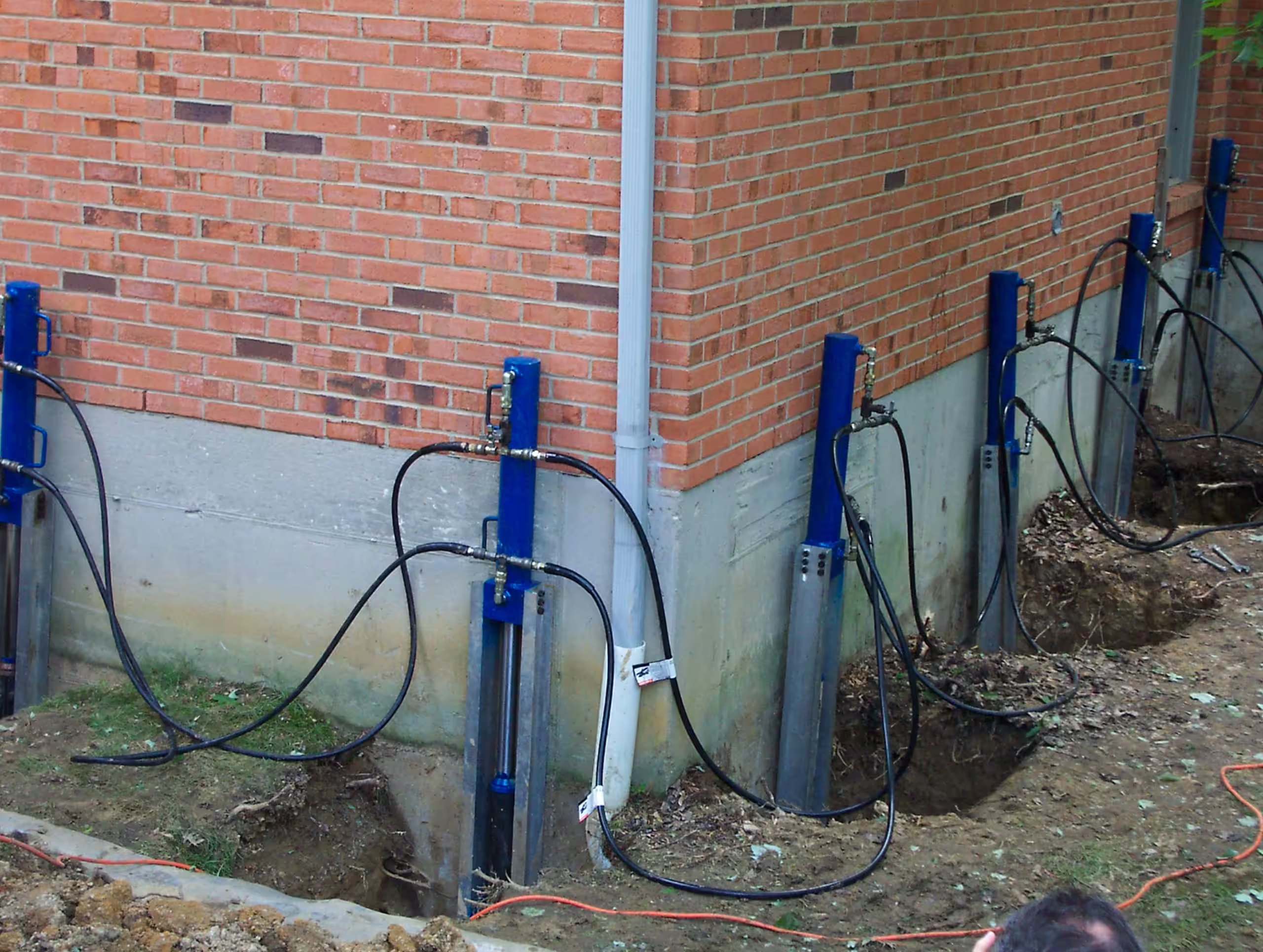
Push piers, for heavier homes that are settling.
What foundation repair costs
The honest answer is that it depends on what’s causing the movement and how much of the foundation needs support, and the only way to give you a real number is to look. As a rough guide, wall stabilization projects at Dwyer generally run from $5,000 to $45,000 or more, depending on how complex the repair is. A single crack repair sits at the low end. A full stabilization with multiple piers sits higher.
Two things make the cost easier to plan for:
- The inspection and written estimate are free, so you’ll know your number before you commit to anything.
- Financing is available if you’d rather spread the cost out. See financing options here.
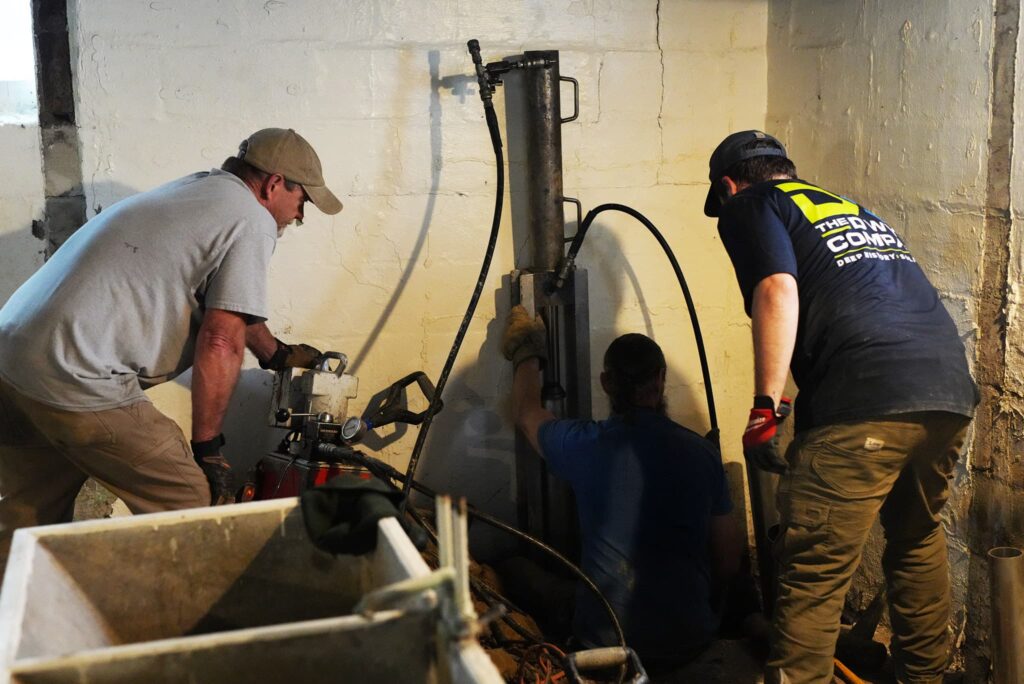
What the repair does to your home and yard
Why homeowners here call Dwyer
-
Three decades in the region.
We’ve repaired foundations across this region for thirty years, so we know the clay soils, the freeze-and-thaw winters, and the older housing stock that tend to cause the movement you’re seeing.
-
A straight answer, every time.
We tell you what your foundation needs and what it doesn’t. If keeping an eye on a hairline crack is the right call instead of a repair, that’s what we’ll say.
-
ICC-certified products.
The systems we install meet national standards for safety and building code, so the fix holds up to inspection and to time.
-
Clean, contained work.
Our crews and equipment are set up to do the job without tearing your home or your landscaping apart.
-
Backed by our guarantee.
Dwyer stands behind our foundation repair work with limited warranty coverage designed to give homeowners added peace of mind. Depending on the recommended solution, coverage will apply to [???]. All foundation repair warranties may be transferred one time within 10 years of completion.
Why foundations move across the Region

The clay-filled hillsides that make Cincinnati so green also hold water and shift slowly downhill, which sends runoff and pressure toward basements built into the slopes.

Much of Dayton sits over the Great Miami Buried Valley Aquifer, so the water table runs high and rises further in the wet months when the rivers recharge it.
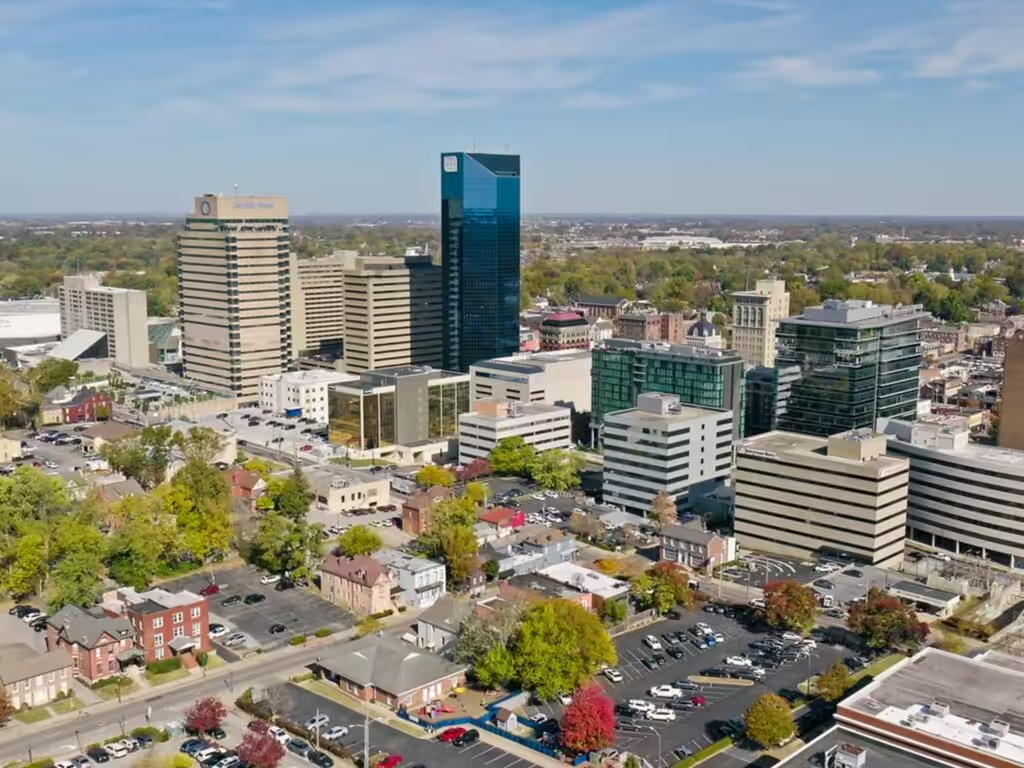
The Bluegrass sits on karst limestone, where water moves fast through underground cracks and can surge up toward basements after a hard rain.

Neighborhoods in the Ohio River floodplain are flat and low, so the water table often sits close to the basement floor.
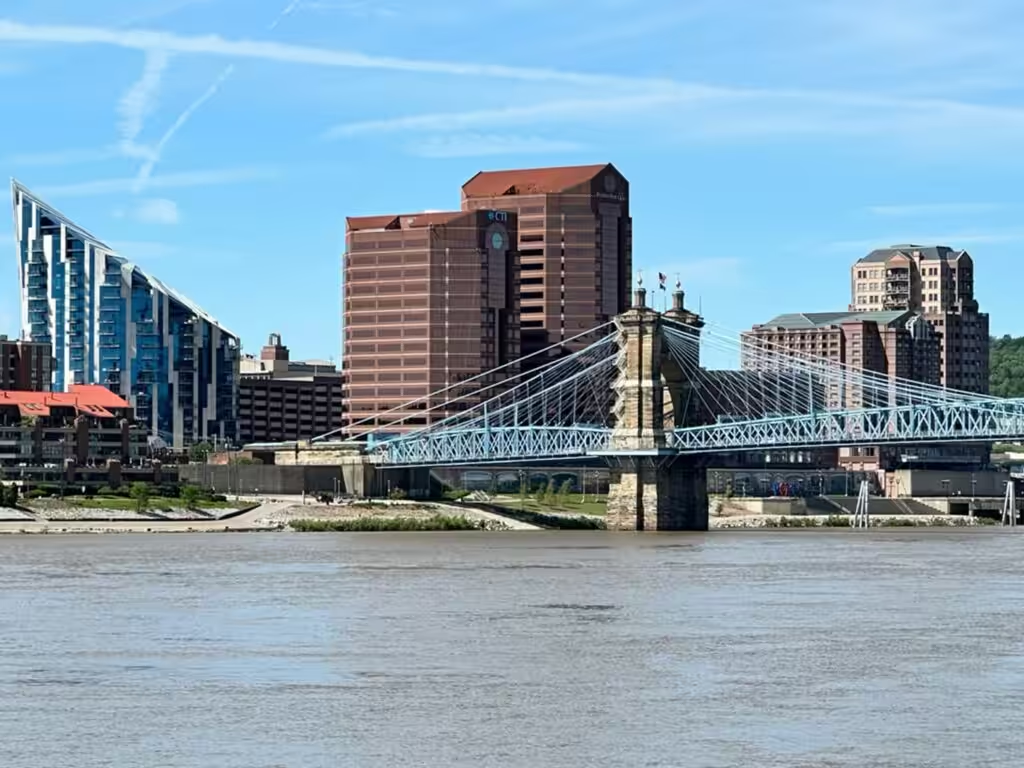
The older homes in the river towns sit on the same steep, clay hillsides as Cincinnati, and their aging foundations take on a lot of slope runoff.

Where the flat river bottoms rise into the Knobs, water sheets down the hills and collects against the foundations of homes below.
Recent foundation repair projects
A bowing basement wall, braced and made solid
The wall was leaning under soil pressure. See what we installed to stabilize it.
A cracked foundation wall, stabilized with tiebacks
Cracks were spreading along the wall. Here’s how we closed the loop.
A settling home, lifted back toward level
Part of the house was sinking. Here’s how we brought it back.
What Your Neighbors Say
- Chuck | Cincinnati, OH
- Nancy | Cincinnati, OH
- Matt | Cincinnati, OH
Frequently Asked Questions
How do I know if my foundation needs repair?
How much does foundation repair cost?
It depends on the cause and how much support the foundation needs. At Dwyer, wall stabilization projects generally run from $5,000 to $45,000 or more, depending on complexity. A single crack repair is at the low end, and a full stabilization with multiple piers is higher. You get a free written estimate before you decide, and financing is available.
Can a bowed or leaning wall be straightened?
Often, yes. With exterior excavation to relieve the soil pressure, many bowed walls can be brought back toward their original position. When full straightening isn’t possible, we can still stabilize the wall and stop it from moving any further. Your estimator will tell you which is realistic for your wall during the free inspection.
How long does foundation repair take?
Most wall stabilization projects take one to two days. Helical pile and push pier installations usually take one to three days, depending on how many piers your home needs and the site conditions. You’ll get a clear timeline with your estimate, and in most cases you stay in your home while the work is done.
Will the repair tear up my yard and landscaping?
Many repairs are done entirely from inside the basement with no digging outside. When a repair does need outside excavation, our crews dig only where it’s needed and restore the area afterward. We’ll walk you through what your yard will look like before and after, so there are no surprises.
Do you offer a warranty?
Yes. Helical pile installations come with a lifetime warranty that transfers to the next owner of the home. Our steel tie-back and pilaster systems are warrantied as well. A transferable warranty protects your home’s value and is worth keeping with your closing documents if you ever sell.
Does foundation repair affect my home’s value?
A repaired, warranty-backed foundation removes a problem that scares buyers and shows up on inspection reports. Fixing it protects the equity in your home and lets you list with documentation that the structure is sound, rather than negotiating against an open foundation issue.
Is foundation movement an emergency?
Usually not. Most foundation issues develop slowly over years, so you typically have time to get an inspection and plan the repair rather than scramble. The inspection is the part worth doing soon, because it tells you whether you’re watching a minor crack or catching something earlier, when it’s simpler to fix.
What causes foundation problems in this area?
Around the region, the main causes are clay soils that swell and shrink with the seasons, water that collects against the foundation, and the soft river-valley and hillside soils common to the region. Older homes feel it more because their footings and walls have had longer to move. An inspection identifies which of these is at work under your home.
H2: Schedule your free foundation inspection
"*" indicates required fields