
How The Dwyer Company Stabilized a Failing Cincinnati Retaining Wall with Soil Nails in 1 Week
- Project Type: Residential
- Project Services: Foundation Repair, Rock Anchors/Soil Nails
The Problem
A retaining wall running 45 to 50 feet across the back of a Cincinnati property was moving. Water building up behind a wall is the usual reason, and it was the likely cause here: soil holds the water, the water adds weight and pressure, and the wall carries all of it. A wall that has started to move keeps moving, because the same pressure that pushed it out of line is still there after the movement stops being noticeable.
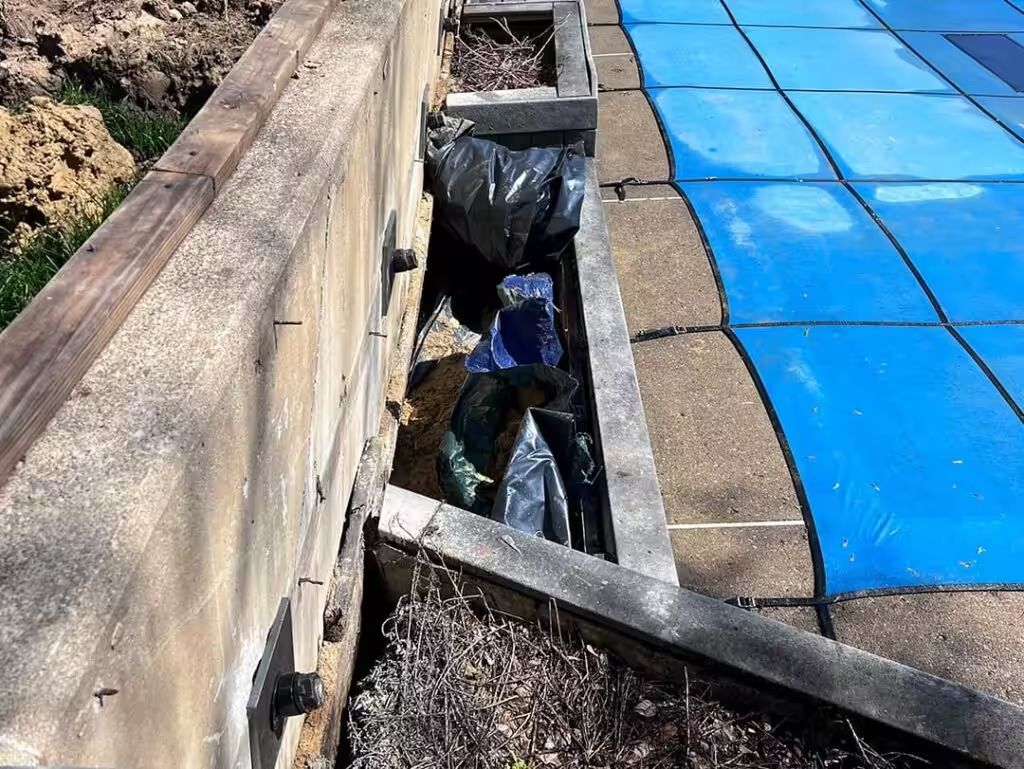
The complication sat at the base. A swimming pool was a couple of feet off the wall, which took away the obvious place to work from and shaped every decision that followed.
Our Solution
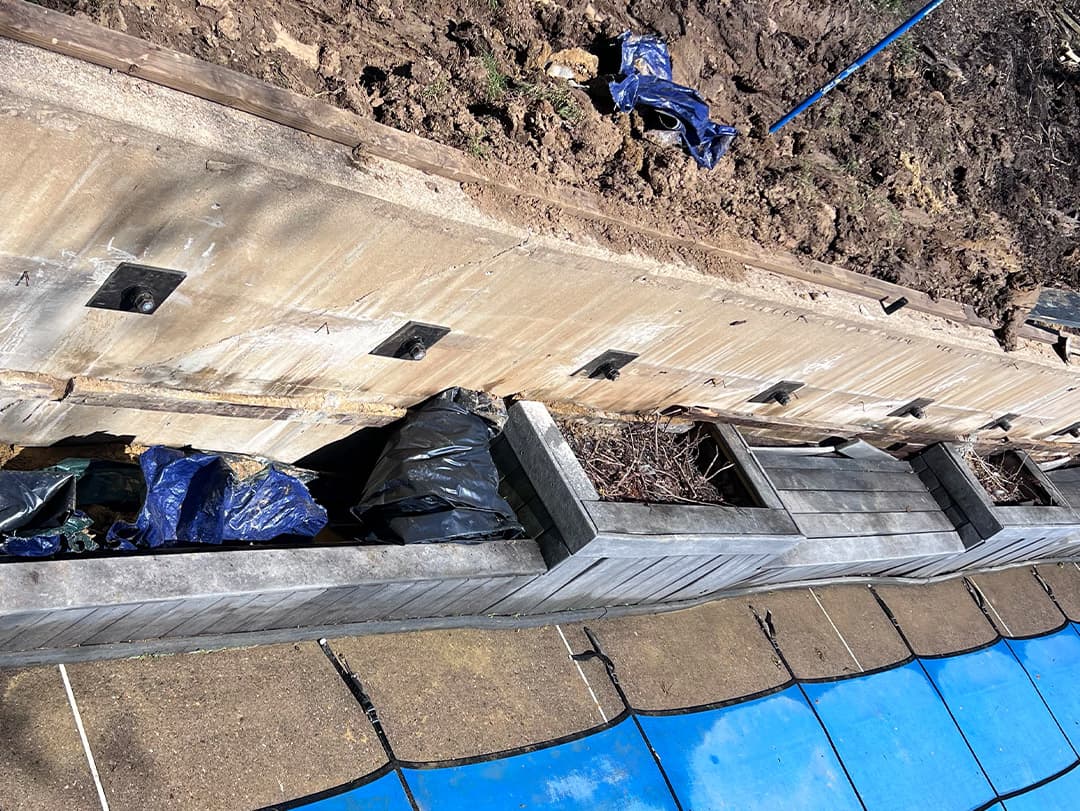
The Dwyer Company and the project engineer designed a soil nail wall, a repair that drills steel bars back into the ground behind the wall and grouts them in place so the earth itself holds the wall. Crews installed 10 soil nails on 30/11 bar, angled at 20 degrees and extending 20 feet past the back of the retaining wall, spaced between 3.5 and 5.0 feet apart. Each nail was designed to support 8.5 kips in tension, the pulling force that keeps the wall from moving out again.
Access decided the method. With the pool a couple of feet from the base, crews could not install the nails from below the wall, so they worked from above it, reaching out over the top of the wall to drill each one. Other retaining walls on the property tightened the approach further, and wet ground made moving the drill rig around difficult and made finding solid footing above the wall a job of its own.
Install completed in 1 week.
The Results
- 10 soil nails now hold the wall, each designed for 8.5 kips in tension, so the pressure behind the wall transfers into stable ground instead of pushing the wall further out.
- The nails extend 20 feet past the back of the wall, well beyond the soil that was moving with it.
- Spacing between 3.5 and 5.0 feet distributes the hold along the full 45 to 50 foot run rather than concentrating it in one section.
- The pool stayed where it was. Working from above the wall meant no excavation at the base, a few feet from the pool shell.
The Challenge We Worked Through
Wet ground ran the schedule. Moving a drill rig across a soft yard is slow work, and every nail needed a stable place for the rig to sit above the wall while it reached out over the top. Between the ground conditions and the weather, the project took longer to get through than the install itself, which was a week of actual work. Tight access between the wall and the other retaining walls on the property left little room to reposition.
Why This Matters
Plenty of homes have a retaining wall holding up a hillside with a pool, a patio, or a deck sitting right at the bottom of it. When that wall starts to lean, the standard fix of digging at the base and rebuilding puts the thing you built down there at risk, and sometimes it is simply impossible. Soil nails installed from above give a way to stabilize the wall in place, which is what let this homeowner keep both the wall and the pool.
- Location: Cincinnati, Ohio
- Completed: March 2026
- Duration: 1 week of installation, with the project delayed by site conditions and weath
Is your retaining wall leaning, cracking, or pulling away?
Deep History • Solid Choice
The Dwyer Company stabilizes failing retaining walls in place, including walls with a pool, patio, or deck sitting too close to dig at the base. Send us photos of what you are seeing and we will tell you what you are looking at.